Tragedy Strikes at LaGuardia Airport: An In-Depth Analysis of the Collision Incident
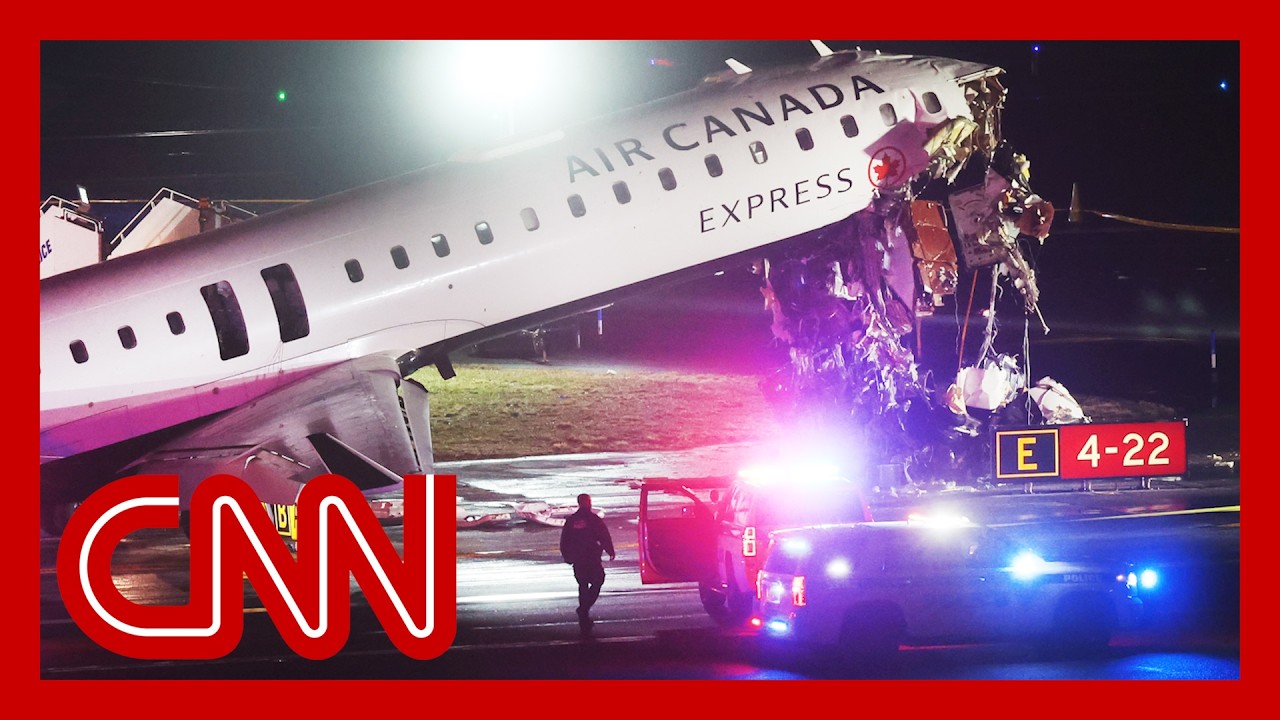
In a harrowing incident at New York’s LaGuardia Airport just before midnight, an Air Canada regional jet collided with a fire truck on the runway, resulting in a devastating loss of life and multiple injuries. The aircraft, representing Jazz Aviation for Air Canada, struck the emergency vehicle shortly after landing, leading to the tragic deaths of both the pilot and co-pilot. As the dust settles, authorities are left grappling with the implications of this catastrophic event.
Eyewitness accounts paint a chaotic picture. Passengers aboard the flight reported a sudden and violent impact during what they had believed was a standard landing. With 72 passengers and four crew members onboard, the situation escalated rapidly into one of confusion and fear as they realized something had gone terribly wrong. One passenger recounted the moment: "We came in pretty hard… and then it was just chaos." Evacuating the aircraft became a priority, and passengers were quickly ushered to safety.
Emergency services responded swiftly. While 41 individuals, including passengers and crew, were taken to nearby hospitals, most sustained injuries that were deemed not life-threatening. However, the tragic realities of the collision overshadowed these injuries. The two emergency responders in the fire truck were reported stable, but the psychological toll of such events cannot be understated.
The timeline of events reveals that the collision occurred at approximately 11:40 PM, soon after the aircraft’s landing from Montreal, which had left at 10:30 PM local time. The regional jet was traveling at about 130 miles per hour during its final descent when it struck the firefighting vehicle, which was reportedly responding to a different emergency call related to a United Airlines flight.
A critical point of investigation lies in the air traffic control communications leading up to the incident. Authorities have emphasized that the radio exchanges were clear—air traffic controllers had given the aircraft clearance to land. Meanwhile, the fire truck was also reportedly cleared to cross the runway. The precise sequence of events that led to the two vehicles being on the runway at the same time is under scrutinous investigation by the National Transportation Safety Board (NTSB).
Expert insights into airport protocols and emergency responses shed light on the mechanics at play. Mary Schiavo, a former Inspector General for the U.S. Department of Transportation, remarked, "Once the aircraft was given permission to land, it essentially owns that runway." Investigators will need to determine how the controllers managed clearance for both the arriving jet and the emergency vehicle and why the situation escalated to this perilous collision.
Despite initial recovery efforts and a ground stop being issued for LaGuardia Airport, operations are expected to face persistent disruptions in the aftermath of this tragedy. The closure of the airport is likely to incite a cascade of delays, adding further stress to an already burdened transportation system trying to navigate ongoing government challenges.
As the investigations unfold, authorities remain focused on gathering evidence, including audio recordings from the control tower. The recordings will provide vital insights into what went wrong. Each air traffic control conversation is meticulously documented, allowing investigators to analyze the unfolding events and responses from all parties involved.
In summary, the collision at LaGuardia Airport is a stark reminder of the vulnerabilities inherent in aviation operations, even in a well-regulated environment. As the NTSB works diligently to unravel the details surrounding this catastrophic event, the emotional and operational ramifications will reverberate throughout the aviation sector and impact the lives of many involved. The hope now is for clarity and accountability amid this tragedy, underscoring the importance of rigorous safety measures in the complex world of air travel.